Visual Album & Site-Responsive Performance Environment
NEBULAH x uberørt
The Sun
The Sun is an evolving collaboration between Danish band NEBULAH and audiovisual art duo uberørt, bringing live music, environmental listening, spatial sound, projection and real-time media into a single performative world.
Beginning with NEBULAH's album The Sun, the project translates the record's emotional and ecological narrative into a continuous spatial journey. Rather than creating individual visuals for each song, the music unfolds inside an environment that changes gradually over the course of the performance — from sparse atmospheric landscapes into a digitally rendered Danish forest that slowly becomes synthetic, unstable and psychologically charged.
At its centre is the relationship between inner life and the natural world: transformation, vulnerability, cycles, loss and renewal.
Developed with support from the Danish Arts Foundation’s New Formats for the Live Stage 2025-2028, in partnership with Godset, Kolding.
The Sun unfolds as a continuous 60-minute performance across the narrative of the album, a few additional songs and interludes.
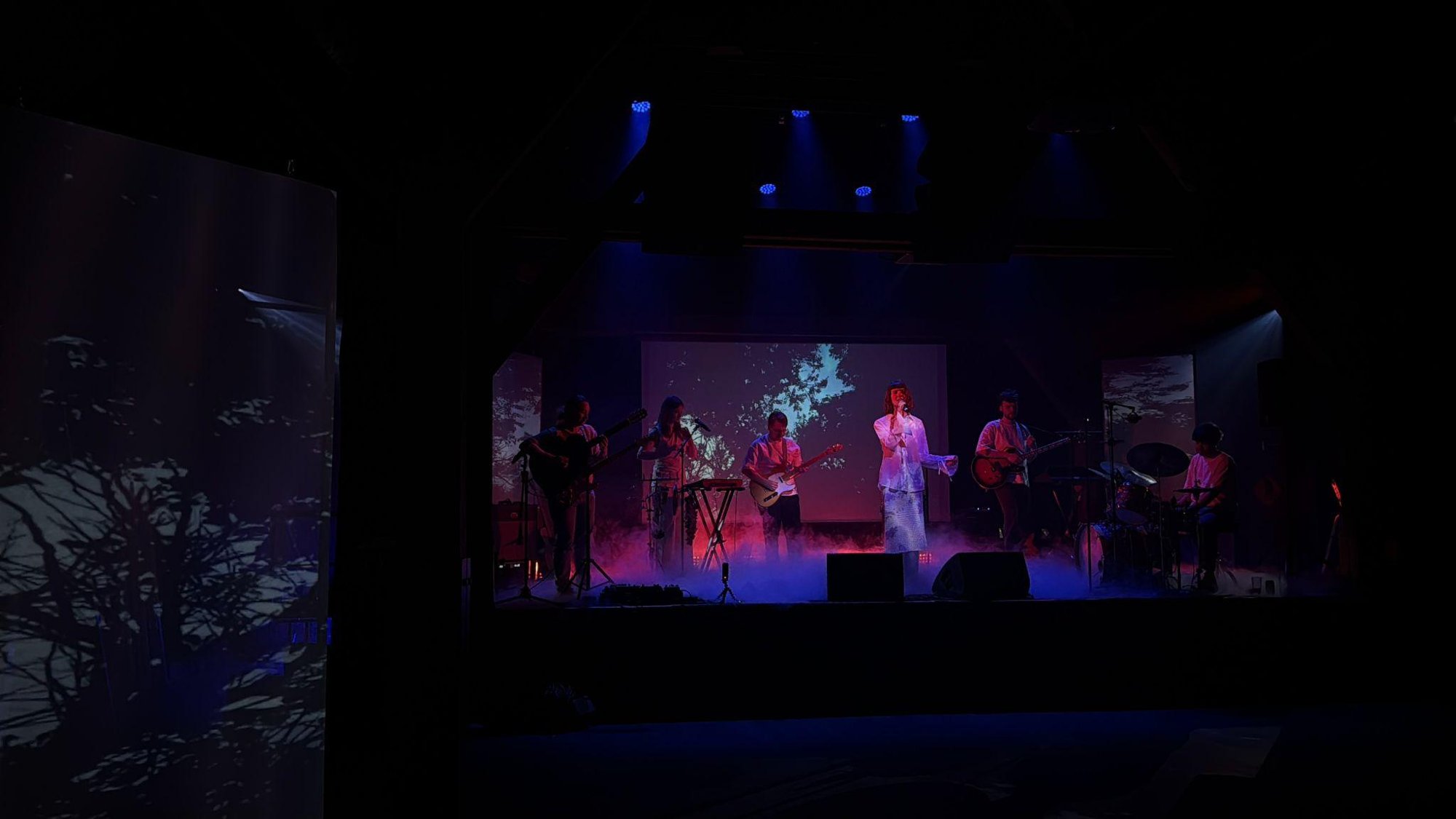
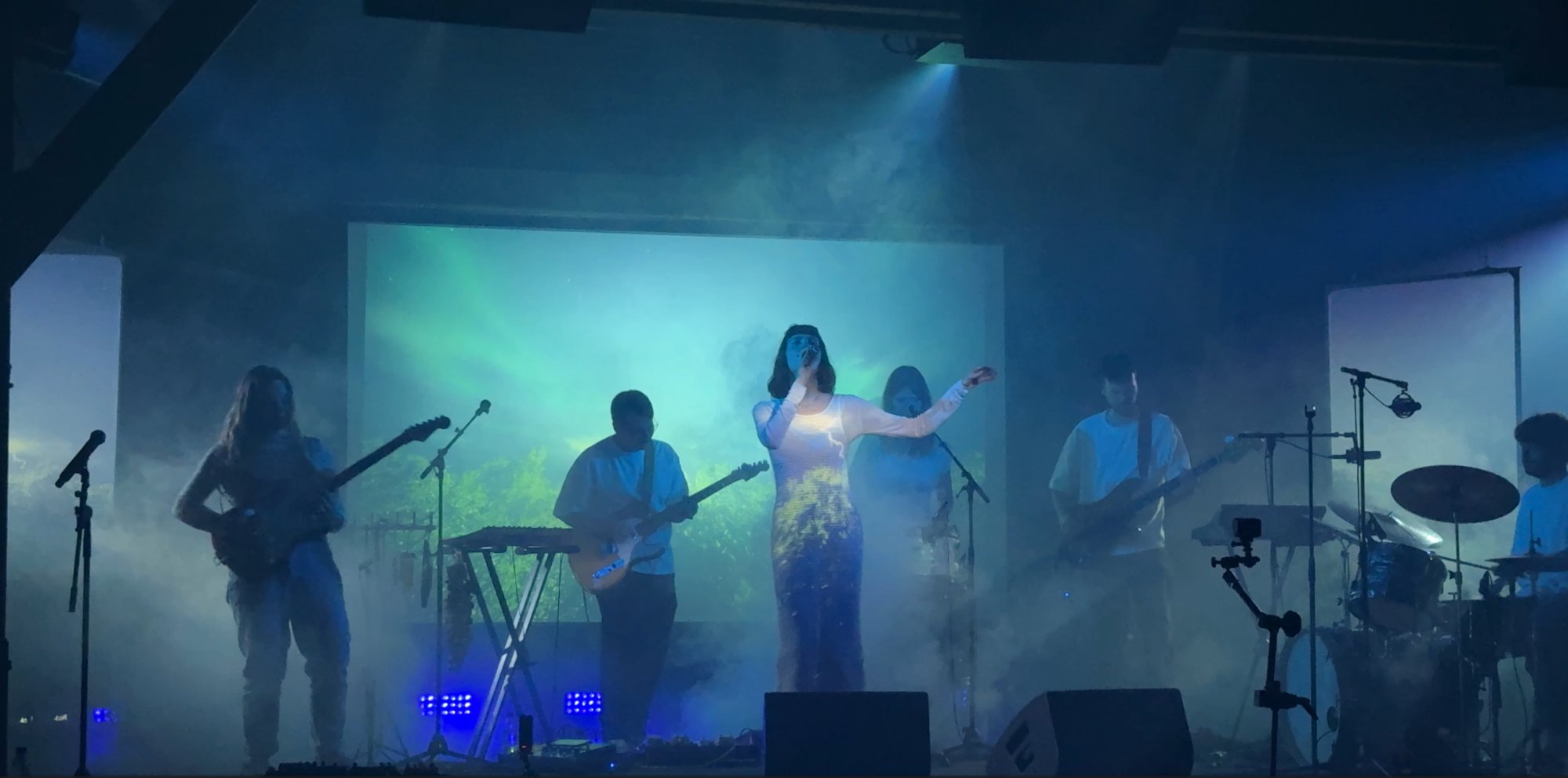
NEBULAH performs live inside a shared environment of spatial sound, projected light and real-time media. Projection cones beam through the architecture, carrying streaks of light through a generative Danish biome, as trees, weather and auroras shift with the dynamics of the music. Performers and audiences inhabit the same changing landscape. NEBULAH and uberørt compose the music, spatial media and live environment as one interconnected system: Sound shapes light and image through audio reactive moments; the performers guide the dramaturgical progression via on-stage control interfaces; and projected light becomes a present scenographic material extending across bodies, surfaces and space from multiple projectors.
The scale is deliberately intimate. The closeness of the musicians, the movement of sound through the room from loudspeaker to loudspeaker and the shifting light create a sensory experience grounded in tenderness, vulnerability and live presence — qualities that also shape the project’s relationship with nature.
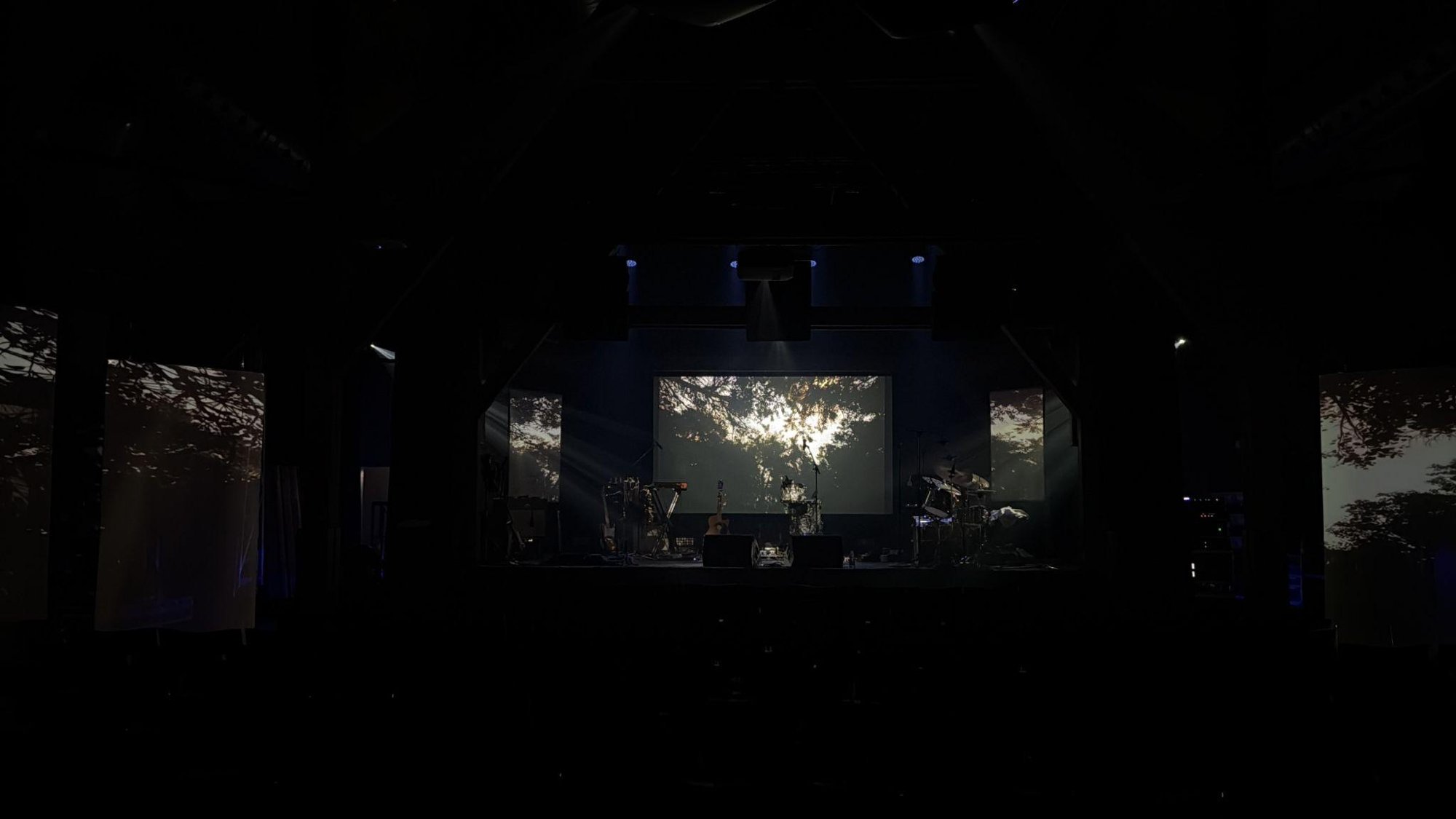
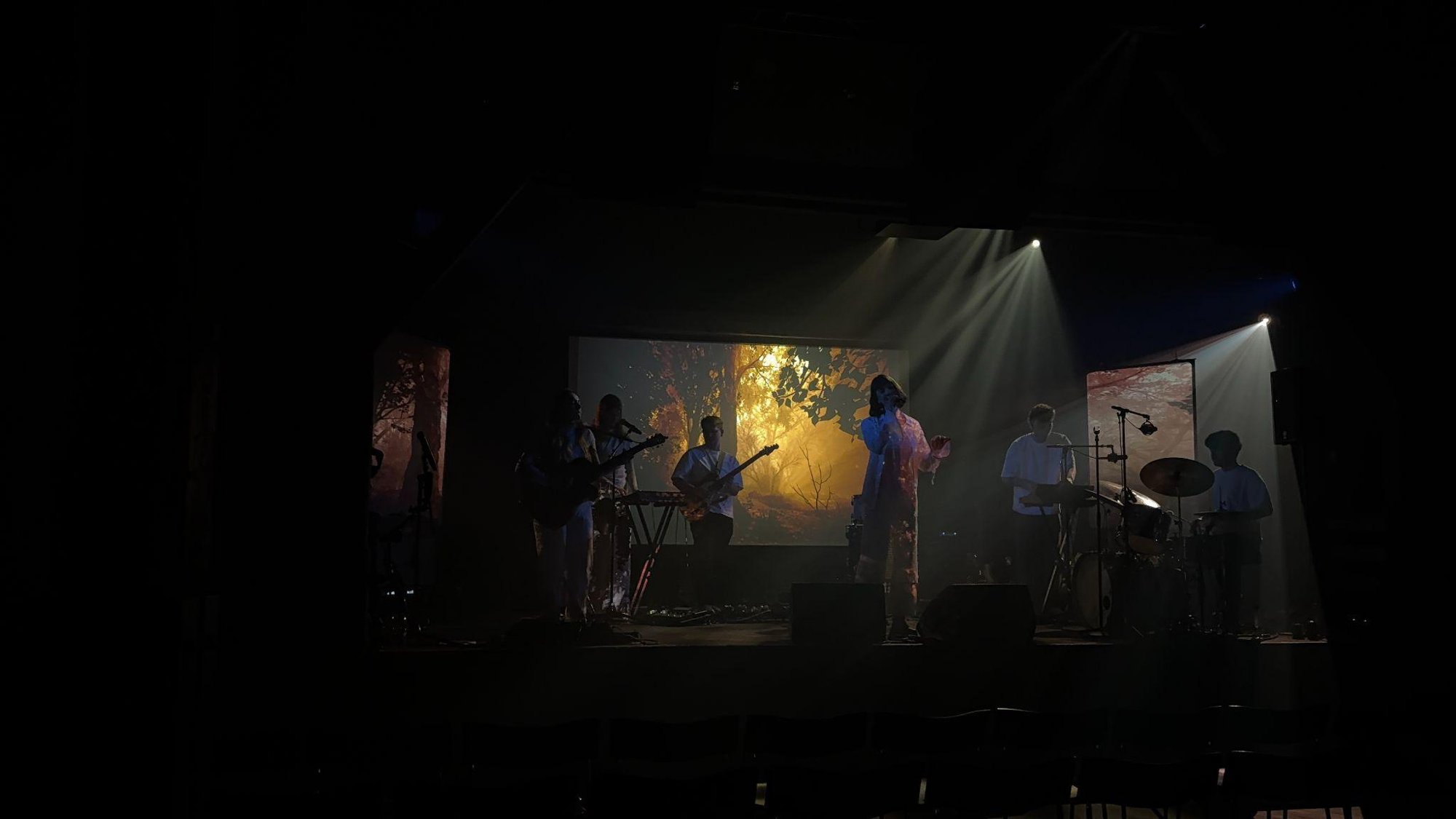
Image from the inaugural performance at Godset, Kolding, 2026. Example of a front facing configuration of the performance visuals and 40+ loudspeakers surrounding the audience with spatial audio.
Nature has been part of The Sun from its earliest stages. NEBULAH developed the music through field recordings, nature excursions and sensory research, listening closely to landscapes and gathering sounds that enter the work as samples, compositional material and starting points for lyrics.
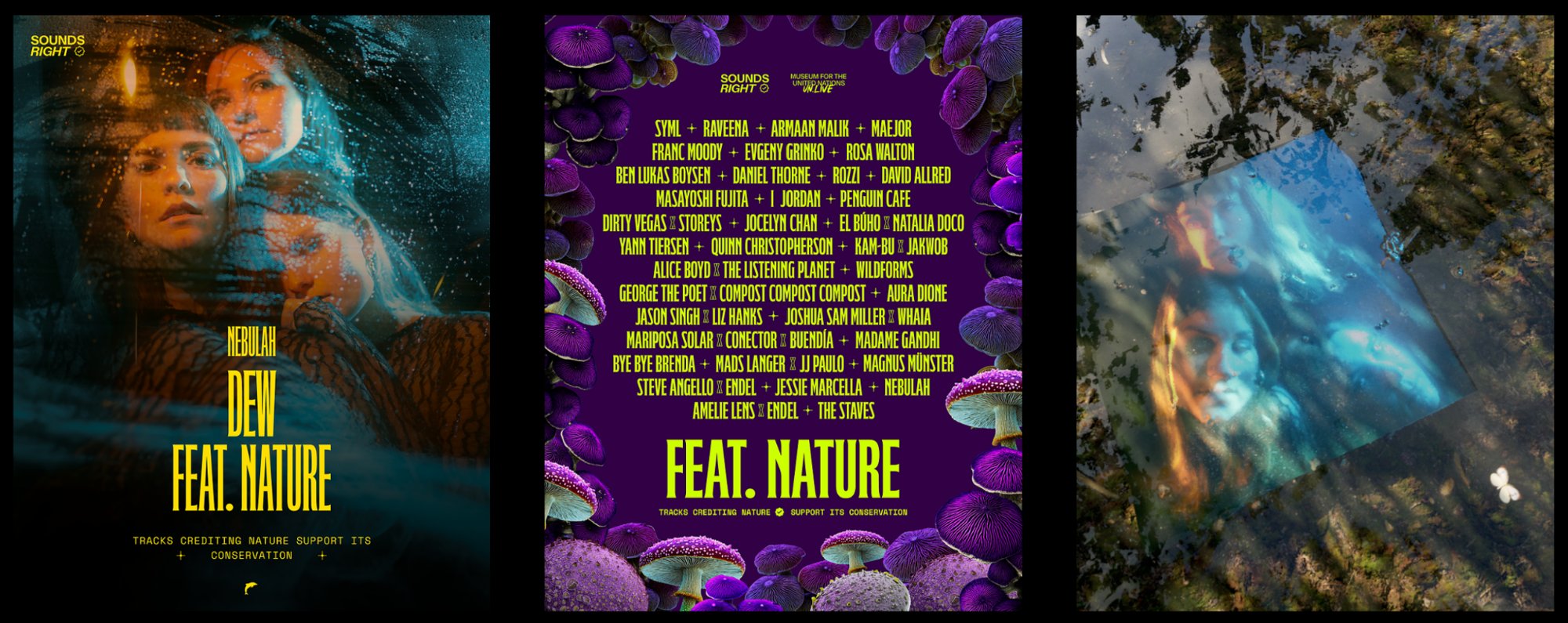
This practice developed through collaborations with Sounds Right, Nature as an Artist and Museum for the United Nations, exploring nature as an active participant in the creative process.
“By creating an immersive listening and concert experience, we want to move even deeper into the theme, both musically and visually. Through co-creation with nature, we strive for a greater understanding of the natural world that surrounds us. By opening our ears and eyes to nature’s voice, and by recognizing nature as an artist in its own right, we can create a deeper connection with the natural world of which we ourselves are a part of.” – NEBULAH & uberørt
Throughout the album, transformations in the natural world become a language for transformations of the body and inner life. The landscape moves continuously between physical observation, memory and psychological experience, and this is reflected in the visual journey as well.
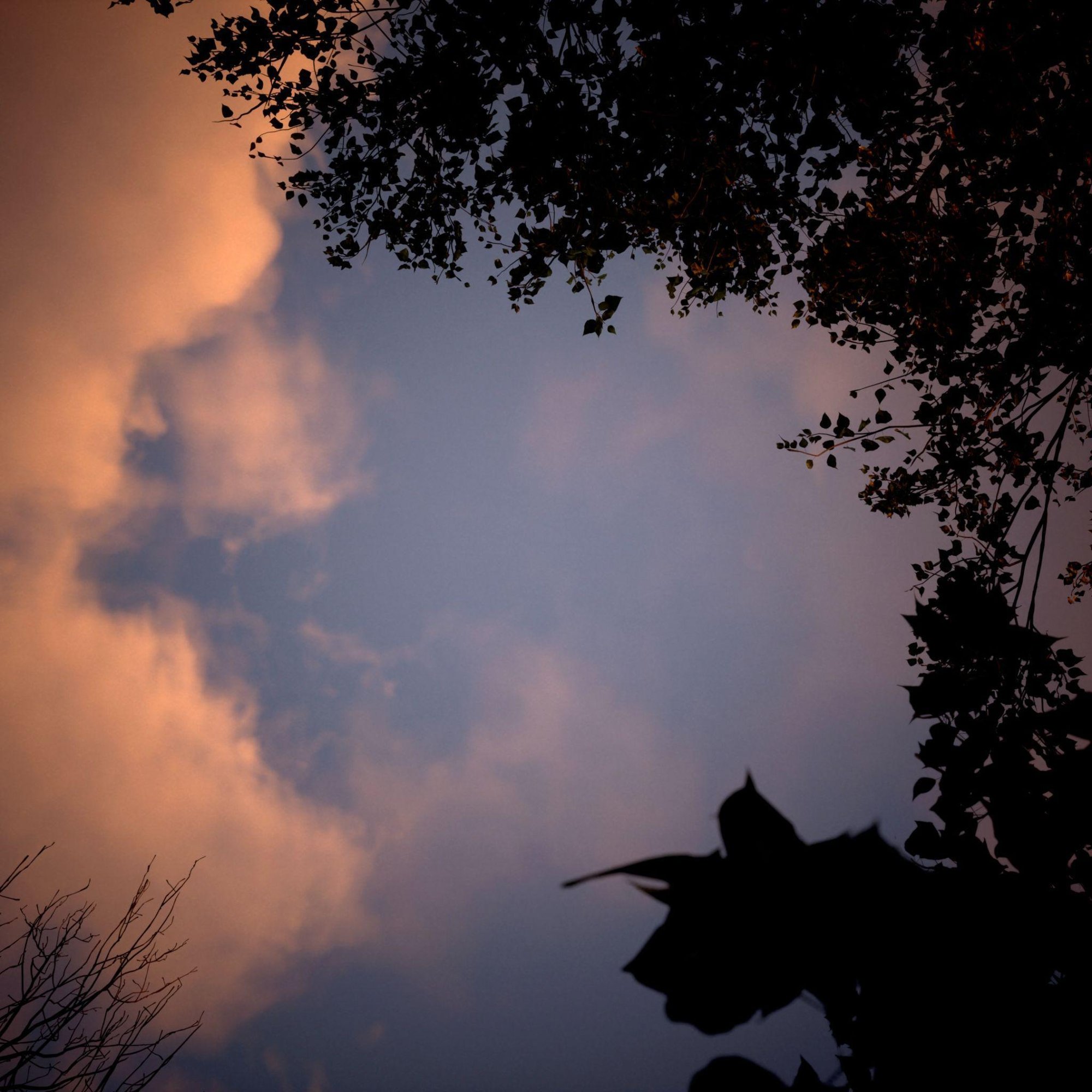
“In the title song ‘The Sun,’ you are standing before a large tree in your garden that suddenly begins to grow black leaves. It is an encounter with life’s sometimes brutal transformations, leaving you with barely enough strength to move with the passage of time and the changing seasons. The song revolves around the sun, whose movement and energy symbolize a journey — from sunrise to sunset. A change has taken place, and the landscape before you now appears bare, open, and raw. The day ends at a new beginning, and the song is a reminder that even in the darkest times, the sun’s rays can find a way through.” – NEBULAH
As The Sun project evolves between NEBULAH and uberørt, this listening practice expands further through contact microphones, spatial recording and the vibration of materials and architecture. Sounds carried through trees, water, metal, concrete and other surfaces can be amplified, sampled and transformed through the musical and digital systems of the performance.
In the garden
I'm in the middle of a dream
with no reason to speak
A swaying shadow in front of me
I was never afraid of the stairs
Now I'm caught
It's the seasons, the sun will rise
The green flourish cover will wither and fade away
It's the seasons, the sun will rise
Blackening the leaves
All I need is peace
But the black blossomed tree grows in me
It's the seasons, the sun will rise
The green flourish cover will wither and fade away
It's the seasons, the sun will rise
The Sun unfolds as a single journey through the landscape, across the performance.
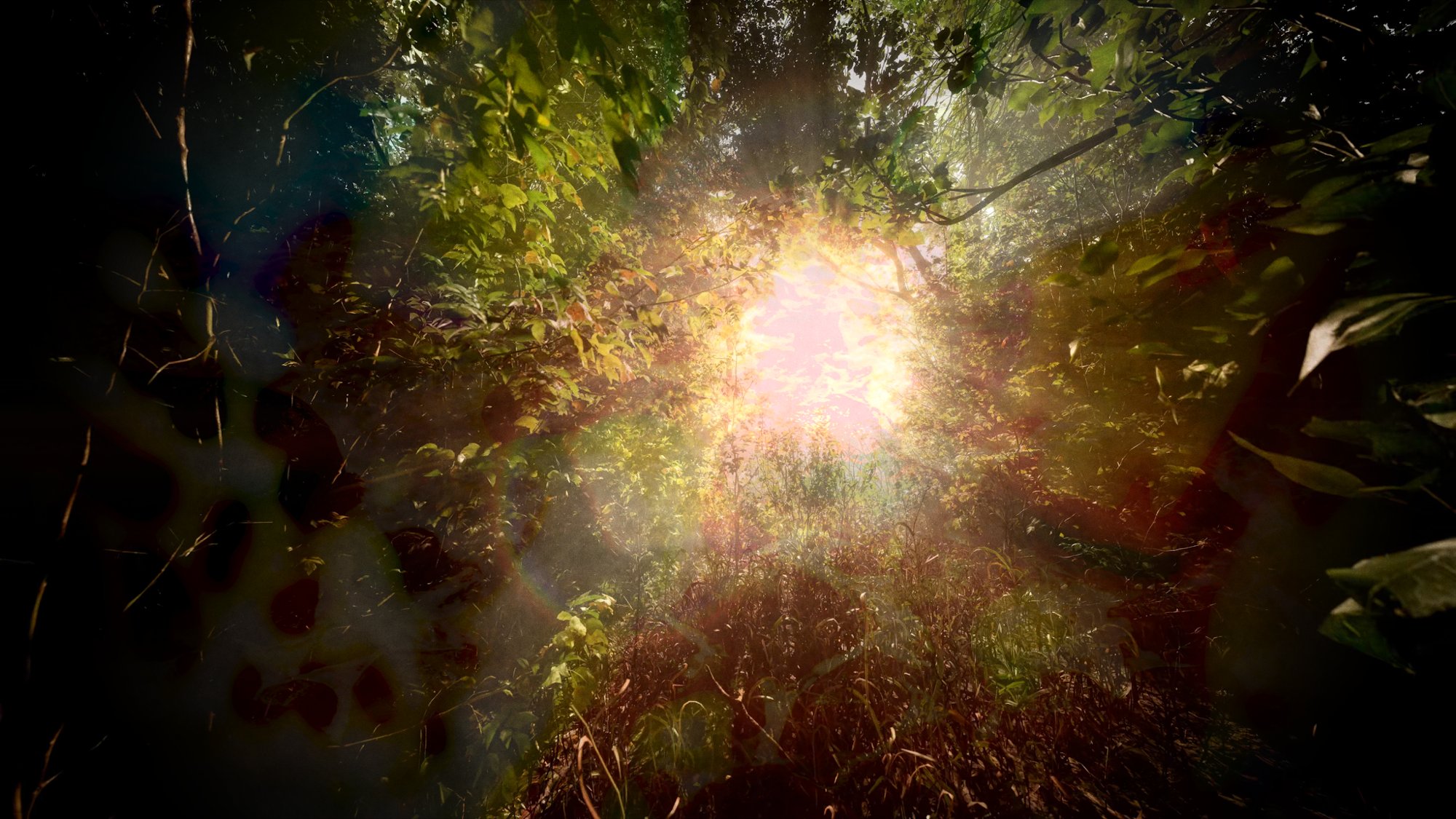
The audience enters a sparse, cold atmospheric field and gradually moves toward a warm forest clearing drawn from the Danish landscape. As the music develops, the environment begins to shift. Light changes, weather gathers, vegetation transforms and familiar natural behaviours become increasingly unstable.
The forest slowly crosses into a more synthetic state. Nocturnal passages bring auroras, heightened colour and increasingly impossible environmental behaviours, allowing the landscape to follow the emotional intensity of the music.
Through these transformations, the digital forest becomes both place and psychological landscape — carrying the album through vulnerability, rupture and change.
In the final passage the environment opens again and the movement of the sun reverses. A cycle has completed, leaving the landscape at the threshold of a new beginning.
“Our collaboration with NEBULAH began by digitally recreating a Danish biome as an environment that initially feels recognizable and believable. That realism establishes a set of expectations, which we then deliberately disrupt. As the natural world gently transitions into something synthetic and unpredictable, a liminal space emerges between the virtual and the real, unsettling the audience’s emotions. Nature becomes a psychological and sensory device rather than a romanticized representation.” – uberørt

Each presentation of The Sun is shaped by its surroundings and by the possibilities of the space. Sometimes the work is experienced almost like stepping into a film, enveloped by a continuous audiovisual world while listening to the band performing live. In other settings, the focus shifts toward listening closely to the site itself.
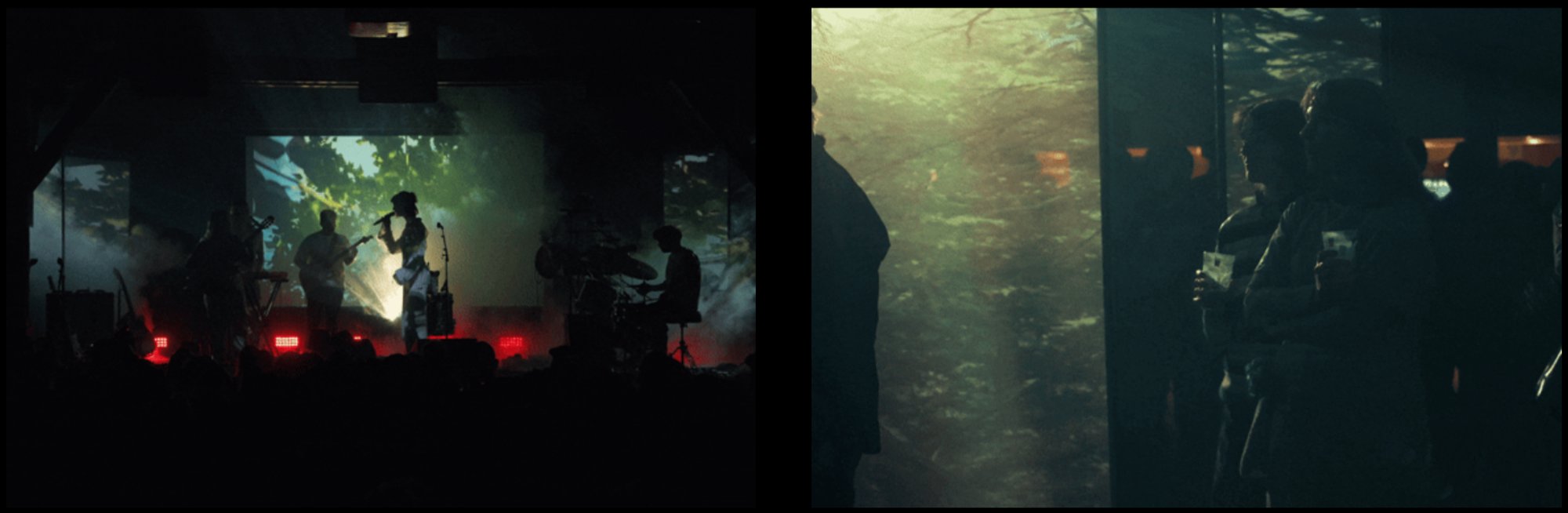
Resonant architecture, local field recordings and contact microphones can bring the surrounding environment directly into the performance, capturing vibrations from materials such as concrete, metal, wood and water. These sounds are sampled, spatialized and folded into the live composition, allowing each presentation to develop a distinct relationship with its location. NEBULAH has for example explored this process together with the Institute for Climate Sound and Society.
Audience participation grows from the same practice of close listening. Selected surfaces and resonant materials become points of encounter, where small sounds and vibrations created by the audience can be captured and transformed through the spatial sound system.
In some presentations, this process can begin with a guided listening or field-recording excursion in the surrounding landscape, with gathered sounds becoming material for the performance that follows.
As the performance develops, these contributions become part of the musical environment alongside the trio, the architecture and the field recordings. In this way, The Sun continues to evolve as an intimate, site-responsive performance language shaped by place, sound and collective participation.
The Sun is now moving into a new phase of international development through residencies, festivals, museums and site-specific presentation contexts. The focus is on creating more intimate versions for trio, expanding the spatial and participatory dimensions of the work, and adapting the piece for very different settings — from concert halls and industrial architecture to outdoor environments.
NEBULAH and uberørt are continuing to develop the project through international partnerships, using each new context as an opportunity to deepen the work’s musical, spatial and performative language.
NEBULAH x uberørt @ Godset - Kunstfondens Nye Live Formater >>
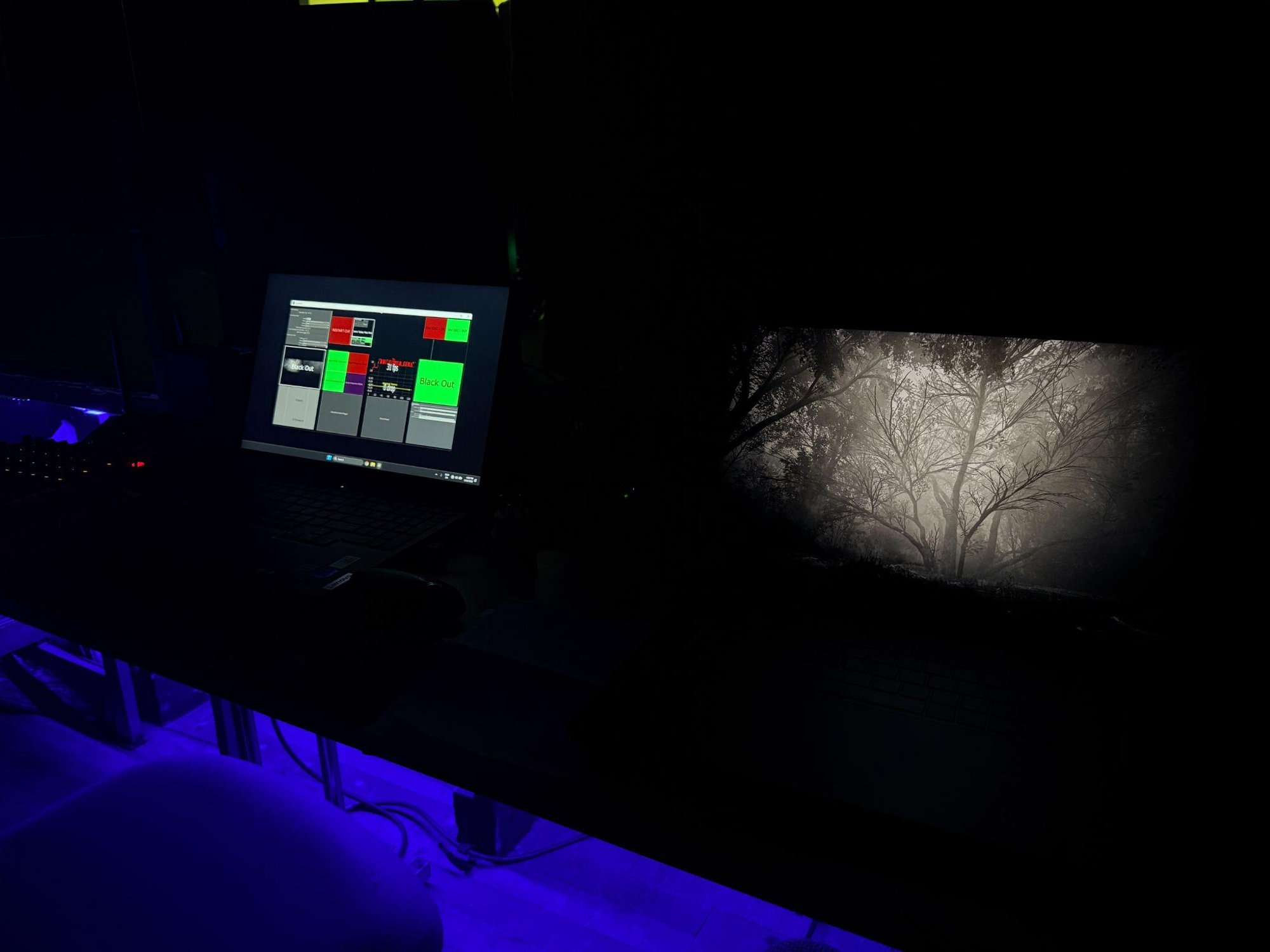
The Sun is built as a fully real-time generative 3D environment whose light, atmosphere, vegetation and visual behaviour evolve live with the music and performance. Audio from the mixing desk is analysed in real time to affect specific parts of the visual system, while performers can influence the progression of the environment through a dedicated control system.
The projection and sound architecture is inherently scalable. The current touring version uses layered foreground and background projection across musicians, surfaces and architecture, while the largest configuration to date has expanded into a 360° immersive environment with 49 loudspeakers and 6 projectors.
The same generative world can be adapted for multi-surface installations, large-scale spatial environments or full-dome projection, allowing The Sun to move from intimate rooms to expansive immersive settings while retaining the same live, responsive relationship between music and environment.
The live setup combines vocals, guitar, synth, acoustic guitar, percussion, drums and stompbox across an 11-channel stage configuration. Additional contact-microphone elements are currently in development.
NEBULAH is a Danish band creating cinematic, experimental Nordic indie rock shaped by themes of nature, intimacy, loss and human connection. The band is led by the front trio of Janne Hagen Therkildsen and Hannah Busk Larsen on vocals, electronics and percussion, and Elisabeth Panduro Holst on guitar. The band’s expressive sound is completed by Mads Menzer on guitar, Jonathan Larsen on bass and Moog, and Mathias Fabricius on drums.
Their debut album TRACE (2022) received national attention, including airplay on P6 Beat, while their second album The Sun develops a more immersive and experimental sound world. Across the album, natural landscapes become a language for inner states: vulnerability, transformation, human relationships and the ways we shape — and are shaped by — the environments around us.
uberørt is the artistic collaboration of new media artist Louise Lessél and visual artist Nina-Franziska Christiansen.
Working across immersive installation, performance art, XR, light and real-time systems, they create environments where music and performance extend beyond the artist and into the surrounding space.
Their work explores the threshold between the physical and virtual, the organic and synthetic, using technology as a performative compositional material to create responsive live audiovisual worlds.
The Sun has been developed through a network of artistic, institutional and production partners supporting new forms of live performance, environmental listening and interdisciplinary work.
Supported by
- Danish Arts Foundation — New Formats for the Live Stage 2025–2028
- Museum for the United Nations - UN Live
- Sounds Right, NATURE the Artist
- Tuborgfondet
- KODA
- Dansk Musiker Forbund
- Dansk Artist Forbund
- Alfa Audio
- d&b Soundscape
- Sonic College
- Sunstill
Residencies
- Godset, Kolding, Denmark (January, March 2026)
- Basement, Copenhagen, Denmark (September 2025)
- March 20, 2026 Godset, Kolding — The Sun album release, NEBULAH × uberørt
- March 27, 2026 Studenterhuset, Aalborg
- April 10, 2026 Radar, Aarhus
- April 30, 2026 BRØK, Brønshøj Kulturhus, Copenhagen
- May 2, 2026 SPOT Festival, Aarhus
- May 8, 2026 Sønderborghus, Sønderborg